

Swimming Pool Rest Chair Buying Guide: What to Check Before You Buy (Material, Drainage, Stackability)
Share
Quick answer: A good swimming pool rest chair should be made of UV-stabilised, waterproof plastic, have drainage holes or slats so it doesn't pool water after rain or a swim, hold enough weight for its intended users, and stack or fold easily for storage. Skipping any of these usually means fading, cracking, or a chair you can't store once the season changes.
Poolside seating looks simple to shop for - until the one you bought last summer is faded, wobbly, or holding a puddle of rainwater by the time the next season rolls around. A swimming pool rest chair lives in one of the harshest environments any piece of furniture faces: constant sun, chlorinated or salted water, monsoon exposure, and being dragged across wet tiles. Most of what separates a chair that lasts five years from one that cracks in five months comes down to a handful of checks you can make before you buy - not after.
Why Poolside Chairs Fail Faster Than Regular Outdoor Furniture
Unlike a balcony chair or garden seat, a pool rest chair deals with three stresses at once: constant UV exposure, repeated wetting and drying, and the chemicals in pool water. Cheaper plastics that aren't built for this combination tend to go brittle, discolour, or crack at the joints within a season or two. This is why the material and build quality matter far more here than they would for indoor furniture.
What to Check Before You Buy: The Essentials
1. Material: Look for UV-Stabilised, Marine-Grade Plastic
Not all plastic is the same. Ordinary plastic furniture left in direct, constant sun can turn brittle and fade within a year. A pool rest chair should be made from UV-stabilised polypropylene or similar marine-grade plastic, which is specifically engineered to resist sun damage and chlorine exposure without discolouring or weakening. This is the single biggest factor in how long your chair survives outdoors.
2. Drainage: Check for Slats or Drainage Holes
A pool chair gets wet constantly - from swimmers climbing out, from rain, from pool splash. If the seating surface is solid with no drainage, water pools on the surface, which leads to algae growth, staining, and a chair that's unpleasant to sit on after rain. Look for a slatted design or built-in drainage holes so water runs off instead of collecting.
3. Weight Capacity: Match It to Actual Use
Weight capacity isn't just a spec on a box - it determines how the chair performs and how long it lasts under normal use. Check the manufacturer's rated capacity and choose a chair rated comfortably above your household's heaviest regular user, not just the average. A chair used consistently near its maximum limit tends to develop stress cracks far sooner than one with headroom to spare.
4. Stackability or Foldability: Plan for Storage
Poolside space is often limited, and most pool chairs aren't left outdoor year-round in every home. A rest chair that stacks neatly or reclines flat for storage makes off-season storage and cleaning far easier than a bulky, fixed-frame design - especially if you're furnishing a villa, farmhouse, or clubhouse poolside with multiple units.
5. Recline Positions and Comfort
Most swimming pool rest chairs - often called sunloungers - offer multiple recline positions, from upright seating to fully flat. If you'll be using the chair for actual sunbathing or resting rather than just quick poolside seating, check how many recline positions it offers and whether the adjustment mechanism feels sturdy, not just the number of positions listed.
6. Wheels or Handles for Mobility
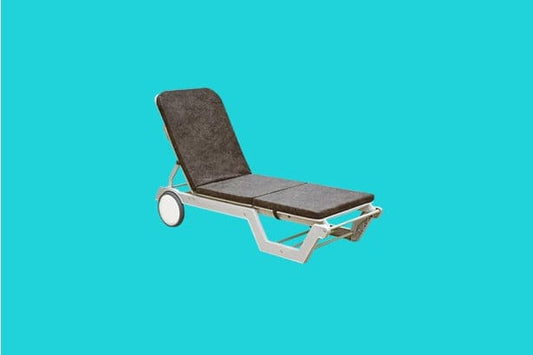
Larger loungers can be awkward to move once positioned. Built-in wheels (common on premium sunloungers) make it far easier to reposition the chair for shade, sun, or storage without dragging it across tiles - which is also what tends to scratch or crack cheaper plastic frames over time.
7. Warranty as a Quality Signal
A manufacturer offering a multi-year warranty on a pool chair is telling you something about the material and build quality they're confident in. Treat warranty length as a practical shortcut for comparing durability across brands, especially since UV and chemical damage often isn't visible until months after purchase.
Quick Comparison: What to Prioritise by Use Case
|
If you're buying for... |
Prioritise |
|
A home pool used by the whole family |
High weight capacity, UV-stabilised material, easy-clean surface |
|
A villa or farmhouse poolside |
Stackability, wheels for repositioning, weather resistance |
|
A clubhouse or commercial pool deck |
Bulk stackability, high-traffic durability, consistent finish across units |
|
Frequent rain/monsoon exposure |
Strong drainage design, UV + water-resistant plastic, rust-free fittings (no metal frame) |
A Note on "Pool Lounger" vs "Pool Rest Chair"
These terms are often used interchangeably, and functionally they refer to the same product - a reclining or flat plastic chair designed for poolside use. Whichever term you search for, the buying checklist above applies the same way.
What This Looks Like in Practice
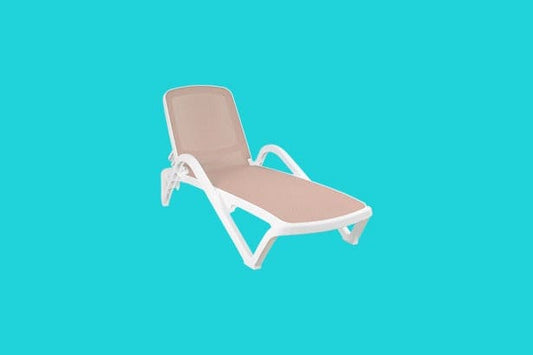
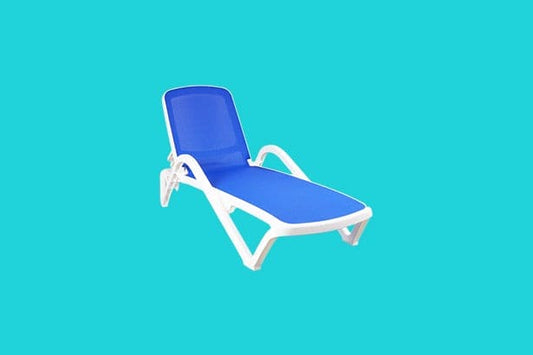
Italica's Sunlounger range is built specifically around these checks - UV-stabilised plastic construction, a slatted design for proper drainage, and a 5-year warranty that reflects the material quality. The Sunlounger 8106 offers multiple recline positions in a lightweight frame, while the Sunlounger 8103 is built for heavier daily use with reinforced support.
Frequently Asked Questions
What is the difference between a pool lounger and a pool rest chair?
There's no functional difference - both terms describe the same type of reclining poolside seating. "Lounger" is the more common product name, while "rest chair" is often how people search for the same product.
What material is best for a swimming pool chair?
UV-stabilised, marine-grade plastic (such as polypropylene) is best for poolside chairs, as it resists sun damage, chlorine exposure, and water without fading, cracking, or becoming brittle over time.
Why does my pool chair collect water after rain?
This usually happens when the seating surface is solid rather than slatted or drilled with drainage holes. Choosing a chair with a slatted design prevents water from pooling on the surface.
How much weight can a plastic pool lounger hold?
This varies by model and should always be checked against the manufacturer's rated capacity. Choose a chair rated comfortably above your household's heaviest regular user for long-term durability.
Can plastic pool chairs be left outside year-round?
UV-stabilised plastic chairs are designed to handle continuous outdoor exposure, but stacking or covering them during extreme weather (heavy monsoon storms, for instance) can further extend their lifespan.
Do pool loungers need maintenance?
Minimal - a rinse with water and mild soap to remove chlorine residue, sunscreen, or dust is usually enough. Avoid harsh chemical cleaners that can degrade the UV coating over time.