

Plastic Shoe Rack vs Wooden Shoe Rack: Which Lasts Longer in Indian Homes?
Share
Quick answer: For most Indian homes, a plastic shoe rack lasts longer than a wooden one. Wood absorbs moisture, warps in humidity, and is vulnerable to termites - a real risk during the monsoon months across most of India. Plastic shoe racks are waterproof, termite-proof, and don't rot, which typically gives them a longer usable life with far less maintenance, though wood can still be the right choice for certain interior styles.
If you've ever pulled open a wooden shoe cabinet in July and caught that damp, musty smell - or found the door swollen shut - you already know the problem this article is about. Below, we break down exactly how plastic and wooden shoe racks compare on the things that actually matter: durability, moisture resistance, cost, maintenance, and lifespan.
Why the Shoe Rack Material Matters More Than You Think
A shoe rack sits in one of the toughest spots in any Indian home - usually near the main door, exposed to outside humidity, monsoon splashes, mud, and the moisture that comes off wet shoes and umbrellas every single day. Unlike a bedroom wardrobe, it rarely gets the luxury of a dry, climate-controlled corner.
That constant exposure to moisture is exactly what wood struggles with - and exactly what plastic is built to handle.
Plastic Shoe Rack vs Wooden Shoe Rack: Side-by-Side Comparison
|
Factor |
Plastic Shoe Rack |
Wooden Shoe Rack |
|
Moisture resistance |
Fully waterproof, unaffected by humidity |
Absorbs moisture, prone to swelling and warping |
|
Termite resistance |
Termite-proof by nature |
Vulnerable unless heavily treated |
|
Monsoon performance |
No damage from damp shoes, splashes, or humidity |
High risk of rot, mould, and odour |
|
Weight & mobility |
Lightweight, easy to shift or rearrange |
Heavy, difficult to move once assembled |
|
Maintenance |
Wipe clean with a damp cloth |
Needs periodic polishing, sealing, pest treatment |
|
Typical lifespan |
8–10+ years with minimal care |
4–7 years, shorter in humid or coastal regions |
|
Rust/corrosion |
Not applicable - no metal fittings to rust |
Metal hinges and hardware can rust over time |
|
Cost (India, 2–4 feet) |
Roughly ₹3,500–₹7,500 depending on size and drawer |
Roughly ₹5,000–₹15,000+ depending on wood type |
|
Assembly |
Often comes pre-assembled or tool-free |
Usually needs carpentry or professional assembly |
|
Best suited for |
Entryways, humid regions, rental homes, frequent movers |
Dry climates, homes prioritising a wood-finish look |
Where Wooden Shoe Racks Fall Short
Wood isn't a bad material - it's simply mismatched to where a shoe rack lives.
-
Moisture absorption: Wood is porous. Even engineered wood (MDF, particle board) swells when it repeatedly absorbs moisture from wet shoes, umbrellas, and humid air near the entryway.
-
Termites: Termites are one of the most common causes of furniture damage in Indian homes, and shoe racks - often placed on the ground floor near an entrance - are a frequent target.
-
Warping and jamming: Once wood absorbs moisture and dries out repeatedly, drawers and doors often stop closing properly.
-
Odour retention: Damp wood combined with enclosed shoe storage is a common cause of the musty smell many people notice in older wooden shoe cabinets.
-
Higher long-term cost: Between polishing, pest control, and eventual replacement, the real cost of a wooden shoe rack over 8–10 years is often higher than its sticker price suggests.
Where Plastic Shoe Racks Win
-
Zero moisture damage: Plastic doesn't absorb water, so daily exposure to wet shoes or monsoon humidity has no long-term effect on the structure.
-
No termite risk: Termites don't feed on plastic, which removes one of the biggest causes of furniture replacement in India.
-
Consistent performance across climates: Whether you're in humid Mumbai, coastal Kerala, or dry Rajasthan, a good-quality plastic shoe rack performs the same way.
-
Lower maintenance: A damp cloth is usually all it takes to keep it looking new - no polishing, sealing, or pest treatment required.
-
Easier to rearrange: Lightweight construction makes it simple to move during cleaning, festivals, or when rearranging a small entryway.
-
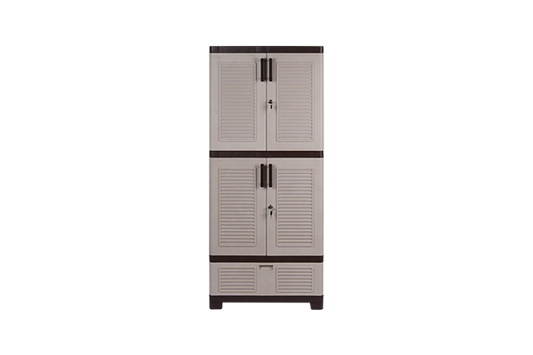
Often includes practical add-ons: Many modern plastic shoe racks, like the Italica SR 5514 DR, combine open shelving with a drawer - giving you space for daily-use shoes plus a closed compartment for polish, brushes, or keys.
What About Looks? Addressing the One Advantage Wood Has
Wood does offer a certain traditional, warm aesthetic that some homeowners prefer. But this is largely a styling consideration, not a durability one - and it comes with a trade-off. If your entryway gets any monsoon exposure, direct sunlight, or humidity (which applies to the vast majority of Indian homes), that aesthetic advantage tends to fade within a few years as the wood ages, discolours, or warps.
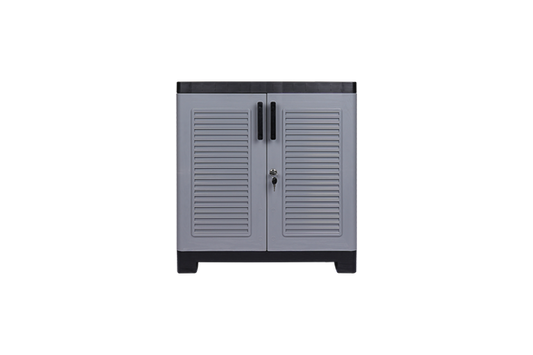
Modern plastic shoe racks have closed the styling gap considerably. Options like the Italica 2 Feet Shoe Rack SR 5512 come in wood-toned finishes (Brown & Almond, Black & S.Grey) that mimic the look of wood while retaining all the durability benefits of plastic.
Cost Comparison: What You Actually Pay Over Time
A wooden shoe rack may look cheaper upfront in some cases, but the real comparison should include the full ownership cost:
-
Wooden shoe rack: Purchase price + periodic polishing + pest treatment + higher likelihood of replacement within 5–7 years in humid regions.
-
Plastic shoe rack: Purchase price + occasional cleaning, with most units backed by multi-year warranties (Italica shoe racks carry a 3-year warranty) and a realistic 8–10 year lifespan.
Over a decade of ownership, a well-made plastic shoe rack is often the more economical choice - even before accounting for the hassle of maintenance.
Our Recommendation
If your entryway sees any monsoon exposure, humidity, or ground-level moisture - which describes most Indian homes - a plastic shoe rack is the more durable, lower-maintenance choice. It's a straightforward way to avoid the termite damage, warping, and recurring upkeep that wooden shoe racks are prone to in Indian conditions.
Explore Italica's full range of plastic shoe racks, including the space-saving SR 5512 (2 feet) and the SR 5514 DR (4 feet with drawer) - both backed by a 3-year warranty and built for Indian weather conditions.
Frequently Asked Questions
Do plastic shoe racks get damaged by termites?
No. Termites feed on wood-based materials, not plastic, so plastic shoe racks carry no termite risk - a key advantage over wooden shoe racks in India.
Are plastic shoe racks strong enough for daily use?
Yes. Quality plastic shoe racks, like Italica's range, are built with reinforced structures to hold multiple pairs of shoes daily without sagging or cracking, and typically come with a multi-year warranty.
How long does a plastic shoe rack last compared to a wooden one?
A well-made plastic shoe rack typically lasts 8–10 years or more with minimal maintenance, while wooden shoe racks in humid or monsoon-prone regions often need replacement within 4–7 years due to moisture and termite damage.
Is a plastic shoe rack a good choice for a rainy or coastal climate?
Yes, plastic is one of the best materials for humid, coastal, or monsoon-heavy regions because it doesn't absorb moisture, warp, or develop mould the way wood can.
Can a plastic shoe rack look as good as a wooden one?
Modern plastic shoe racks are available in wood-toned finishes that closely resemble wood, so you don't have to compromise on style to get the durability benefits.
What size shoe rack do I need for a small entryway?
For compact entryways, a 2-feet shoe rack (like the Italica SR 5512) comfortably fits multiple pairs without taking up much floor space; for larger families, a 4-feet option with a drawer offers more storage plus a closed compartment.