

Plastic Chairs vs Wooden Chairs: Which Is Better for Indian Homes in 2026?
Share
Every Indian household faces this decision at least once - often more. You need chairs for the dining table, the balcony, the spare room, or the inevitable stream of guests that arrives during festivals and family occasions. Wooden chairs have an undeniable appeal: the warmth, the weight, the sense of permanence. Plastic chairs have an equally undeniable argument: the price, the practicality, the effortless maintenance. In 2026, with both categories having evolved significantly, the choice is neither as obvious nor as simple as it once seemed.
This is not a post with a predetermined answer. Wooden chairs are genuinely better for certain rooms, certain buyers, and certain priorities. Premium plastic chairs are genuinely better for others. What follows is a detailed, honest comparison across every dimension that matters in an Indian home - climate performance, durability, maintenance, aesthetics, comfort, value, and environmental impact - so you can make the right call for your specific situation.
How Do Plastic and Wooden Chairs Compare for Indian Climate Conditions?
India is not one climate. Mumbai's coastal humidity is a different challenge from Delhi's extreme heat-and-dust cycle, which is different again from Bengaluru's mild year-round conditions or Chennai's sustained heat and coastal air. The chair that performs well in one environment may underperform significantly in another.
The core climate challenge for wooden furniture in India is moisture. Wood is hygroscopic - it naturally absorbs and releases moisture based on ambient humidity. When the relative humidity in a room rises above 60%, which happens across most of India during the monsoon months from June to September, wood swells, warps, and bends. This leads to misaligned joints, sticking chair legs, surface cracking, and in severe cases, structural weakening at glued or dowelled joints. In coastal cities like Mumbai, Kochi, Chennai, and Visakhapatnam, this moisture stress is not seasonal - it is present for eight to ten months of the year.
The second climate threat specific to India is termites. According to the Indian Council of Agricultural Research, termite activity increases by 60 per cent during monsoon months due to elevated moisture levels. Coastal areas with salt-laden air are particularly susceptible. Termites feed on the cellulose in wood and can silently compromise a chair's structural integrity from the inside - sometimes going undetected until the damage is irreversible. Anti-termite treatment at the time of manufacture provides some protection, but this protection degrades over time and requires periodic reapplication.
Premium plastic chairs, by contrast, are chemically inert to moisture. Polypropylene does not absorb water, does not swell or warp, does not support mould growth on its surface, and provides no nutritional value to termites whatsoever. In the most demanding Indian climate zones - coastal cities, high-rainfall regions like the Western Ghats and Northeast India, and areas with known termite pressure - this material advantage is substantial and measurable over a multi-year ownership period.
For interior spaces in climate-controlled homes with consistent humidity management, the climate performance gap between quality wood and quality plastic narrows considerably. In non-air-conditioned spaces, semi-outdoor areas like covered balconies and verandahs, and any setting with seasonal humidity variation, premium plastic holds a clear climate performance advantage.
Which Lasts Longer: A Plastic Chair or a Wooden Chair?
Durability is the dimension where the answer is most genuinely dependent on product quality at both ends of the comparison.
A high-quality solid wood chair - teak, sheesham, or oak - made with proper joinery and treated for the Indian climate can last 15 to 25 years or more with appropriate care. Indian-made teak and sheesham furniture has a strong track record of multigenerational use.
A low-quality wooden chair - made from softwood, engineered wood, or MDF with thin veneer - may show structural weakness within three to five years in Indian conditions. The wood species and construction method matter enormously.
Similarly, a premium plastic chair from a quality manufacturer using virgin polypropylene with UV stabilisers and precision injection moulding has a practical lifespan of 8 to 12 years under daily household use. The India chair market reached USD 884 million in 2025 and is forecast to grow at a CAGR of 7.6% through 2035, with premium plastic chairs taking an increasing share precisely because buyers have experienced this durability firsthand over the past decade.
A low-quality plastic chair - made from recycled resin, thin-walled moulding, or without UV stabilisers - may crack under normal use within two to three years, particularly in outdoor or semi-outdoor settings.
The honest durability comparison, therefore, is not "plastic vs wood" - it is quality plastic vs quality wood. At equivalent quality levels, solid wood has a longer theoretical lifespan but carries significantly higher maintenance requirements to achieve it. Premium plastic has a shorter absolute lifespan but achieves it with minimal care.
Italica manufactures its chairs from virgin polypropylene using precision injection moulding - the same structural approach that gives the Oxy Series, Spine Care Series, and Designer Series their 8–12 year household durability track record across India's varied climate conditions.
Which Requires Less Maintenance: Plastic or Wood?
This is the dimension where plastic chairs hold their clearest, most unambiguous advantage for Indian households.
What does wooden chair maintenance involve?
Wooden chairs in Indian homes require a maintenance routine that most households underestimate at the time of purchase. Regular dusting to prevent surface accumulation. Polishing with appropriate wood polish twice a year to maintain the surface seal. Checking and reapplying anti-termite treatment periodically - typically every two to three years for treated wood. Inspecting joints annually for loosening due to wood movement from humidity cycles. Avoiding direct sunlight on surfaces to prevent drying and cracking. Keeping away from water contact - a wet mop used near a wooden chair leg repeatedly over years causes progressive swelling and joint damage.
During the monsoon specifically, wooden chairs need active management: keeping them away from windows and doorways where rain may splash, using silica gel sachets near furniture in humid rooms, and avoiding placing them on wet floor surfaces.
What does plastic chair maintenance involve?
Wipe with a damp cloth. That is, largely, the complete maintenance brief for a quality plastic chair in a typical Indian home. No polishing. No anti-termite treatment. No seasonal preparation. No joint inspection. If the surface becomes heavily soiled, mild soap and water restores it completely. If the chair is used outdoors or on a balcony, an annual UV-protective spray adds longevity - but this is enhancement, not requirement.
For Indian households where floor cleaning is a daily activity and furniture is regularly moved for mopping, the lightweight and wipe-clean nature of plastic chairs makes them significantly more compatible with the realities of Indian domestic cleaning routines than heavier, surface-sensitive wooden chairs.
Italica's plastic chairs - across the Oxy, Spine Care, Cafe, and Designer Series - use a non-porous polypropylene surface that does not retain stains, does not harbour bacteria in surface pores, and cleans completely with a standard damp cloth in seconds.
How Do Plastic and Wooden Chairs Compare on Aesthetics and Design?
This is the dimension where wooden chairs hold their strongest argument - and where the gap between quality plastic and quality wood has narrowed more than most buyers expect.
Solid wood chairs carry a visual warmth, grain texture, and sense of material quality that no plastic chair fully replicates. In a traditional Indian home with wooden floors, cotton cushions, and earthy tones, a sheesham dining chair with a carved backrest belongs in a way that a plastic chair simply does not. In formal dining rooms, in drawing rooms where the furniture is a deliberate part of the aesthetic, and in heritage or traditionally styled interiors, quality wood remains the superior aesthetic choice.
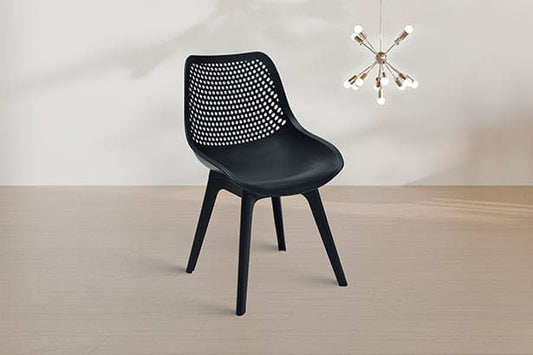
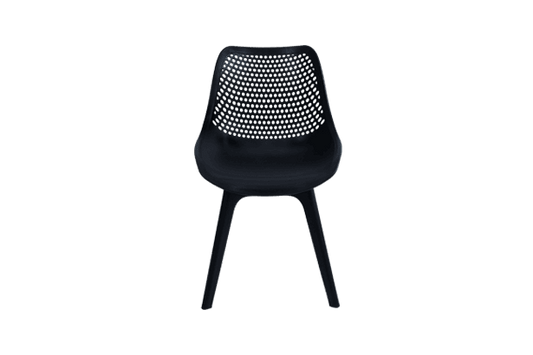
In contemporary, minimalist, and modern Indian interiors - which represent the direction of most new housing in urban and semi-urban India - the aesthetic gap has narrowed considerably. Today's premium plastic chairs include sculpted forms, matte finishes, neutral colour palettes, and design profiles that read as modern and considered rather than purely functional. Italica's Designer Series and Spine Care Series, for example, are designed with the visual requirements of contemporary Indian interiors in mind - these are not the plain white monobloc chairs of two decades ago.
The practical aesthetic consideration unique to India is also worth noting. Bright colours are practical in Indian homes - they show dust less on daily surfaces, they hold up visually in the strong indoor light of Indian daylight, and they integrate with the bold colour palettes common in Indian interiors. Italica's chair range spans a wide colour palette precisely because Indian homeowners have distinct colour preferences across different rooms and geographies.
Which Is Better Value Over Time: Plastic or Wooden Chairs?
Total cost of ownership - the purchase price plus maintenance cost over the product's lifespan - tells a more complete story than the upfront price comparison alone.
|
Factor |
Quality plastic chair |
Quality wooden chair (solid wood) |
|
Typical purchase (per chair, Indian market) |
Lower |
Significantly higher |
|
Annual maintenance cost |
Negligible |
Polish, treatment, occasional repairs |
|
Climate risk (India) |
Very low |
Moderate to high (humidity, termites) |
|
Replacement likelihood (10 years) |
Low |
Low (if maintained) / High (if not) |
|
Resale or reuse value |
Low |
Moderate |
|
Suitable for outdoor/balcony |
Yes |
No (most wood types) |
|
Stackability for storage |
Excellent |
Poor |
|
Value for multi-use (indoor + outdoor) |
Excellent |
Limited |
For buyers furnishing rental properties, second homes, children's rooms, kitchens, and multi-purpose spaces where furniture is used hard and cleaned frequently, the total cost of ownership calculation strongly favours quality plastic. The lower purchase cost, negligible maintenance expense, and climate resilience mean that a well-chosen plastic chair costs significantly less per year of use than an equivalent wooden chair over a decade.
For buyers furnishing a primary dining room or drawing room in an owned home with a long-term design investment mindset, quality solid wood offers genuine value through longevity, aesthetic continuity, and modest resale value - provided the maintenance commitment is met.
Are There Rooms Where One Is Clearly Better Than the Other?
Yes - and making the right call by room is how most experienced Indian buyers approach the decision rather than choosing one material for the entire home.
Dining room (owned home, formal use): Wooden chairs have a stronger case here. The dining room is where aesthetic investment pays the most visible returns, where the chairs are used in relatively controlled conditions (indoors, climate-managed), and where the formal character of solid wood aligns with how most Indian families use this space.
Kitchen and utility seating: Plastic chairs are the clear choice. Kitchen environments involve food spillage, daily mopping, and practical rather than aesthetic priorities. The wipe-clean polypropylene surface and lightweight handling are decisive advantages here.
Balcony and semi-outdoor spaces: Plastic without question. No wood type performs reliably on an Indian balcony exposed to monsoon rain, afternoon sun, and salt air in coastal cities. Italica's outdoor-suitable chair range including the Oxy Series and Designer Series is built specifically for these environments.
Children's rooms and study spaces: Plastic is strongly preferred. Children's furniture is subject to rough handling, spills, and the need for easy cleaning. The lightweight nature of plastic chairs means children can move them independently. Italica's Kids World Series addresses the specific ergonomic and size requirements of younger users.
Guest room and additional seating: Plastic chairs that stack are the practical solution for the Indian household's variable seating requirement. A stack of six Italica chairs stored in a corner cupboard provides instant seating for a full family gathering and disappears back into storage when not needed.
Drawing room and formal living space: This is where the aesthetic case for wood is strongest, and where the buyer's priorities most strongly determine the right answer. A traditional or transitional Indian drawing room calls for wood. A contemporary or minimalist one may be served equally well by a premium plastic chair from Italica's Designer Series.
What About the Environmental Comparison?
This is a dimension that Indian furniture buyers are increasingly considering in 2026, and where the honest answer is more complex than either side's advocates typically acknowledge.
Solid wood from sustainably managed forests is a renewable material that stores carbon for its lifespan. When well-maintained and used for 20+ years, a quality wooden chair has a strong environmental profile.
The environmental challenge with Indian wooden furniture is that the supply chain is not consistently transparent. Much of the wood used in mid-market Indian furniture is not independently certified for sustainable sourcing. Illegally harvested timber remains a concern in parts of the supply chain.
Polypropylene plastic is a petroleum-derived material and is not biodegradable. However, it is fully recyclable at end of life, and its long service life - particularly for UV-stabilised products - means the material is used efficiently over an extended period. The low maintenance requirements of plastic furniture also mean no chemical treatments, polishes, or pesticides are used over the product's lifetime.
The most honest environmental answer for Indian buyers: a long-lasting product in either material, used fully over its entire service life and disposed of responsibly, is significantly better than a short-lived product of either type that is replaced frequently. Buying a premium plastic chair that lasts a decade is environmentally more responsible than buying a cheap wooden chair that fails in three years.
So Which Should You Choose?
The honest answer is: use both, strategically.
Wooden chairs belong in rooms where aesthetics are the primary priority, where the space is climate-controlled, and where the buyer is committed to the maintenance routine that wood requires in the Indian climate. For primary dining rooms and formal living spaces in owned, well-maintained homes, quality solid wood remains a sound investment.
Plastic chairs are the practical choice for kitchens, balconies, children's rooms, multi-purpose spaces, and any setting where maintenance simplicity, climate resilience, and operational flexibility matter more than material aesthetics. For rental homes, second properties, busy family households, and commercial spaces, premium plastic chairs represent a more rational total cost of ownership.
Italica's chair range - spanning the ergonomic Spine Care Series, the versatile Oxy Series, the contemporary Designer Series, and the multi-functional Cafe Series - is designed to serve exactly these use cases with a quality of manufacture that delivers on the full lifespan premium plastic can achieve in Indian conditions. Explore the full collection at italica.com to find the right chair for every room in your home.
Frequently Asked Questions
Q: Are plastic chairs better than wooden chairs for Indian homes?
A: It depends on the room and the buyer's priorities. Plastic chairs are better for kitchens, balconies, children's rooms, and multi-purpose spaces - they resist Indian humidity, require minimal maintenance, and are immune to termites. Wooden chairs are better for formal dining rooms and drawing rooms where aesthetics are the primary consideration and the space is climate-controlled. Most experienced Indian buyers use both materials strategically across different rooms.
Q: Do wooden chairs get damaged during Indian monsoon?
A: Yes, wooden chairs are vulnerable to India's monsoon conditions. Wood is hygroscopic - it absorbs moisture from humid air, causing swelling, warping, and joint loosening. According to the Indian Council of Agricultural Research, termite activity - which targets wooden furniture - increases by 60 per cent during monsoon months. In coastal and high-rainfall cities, this vulnerability is present for most of the year rather than just the monsoon season.
Q: How long do plastic chairs last compared to wooden chairs in India?
A: Premium quality plastic chairs from manufacturers using virgin polypropylene with UV stabilisation typically last 8 to 12 years under daily household use in India. High-quality solid wood chairs - teak, sheesham, or oak - can last 15 to 25 years or more with appropriate maintenance. Low-quality versions of both materials fail significantly sooner: poor quality plastic within 2 to 3 years, poorly constructed wooden chairs within 5 to 7 years in humid Indian conditions.
Q: Which is easier to maintain - a plastic chair or a wooden chair in India?
A: Plastic chairs require significantly less maintenance in India. A damp cloth clean is sufficient for regular upkeep, with no polishing, anti-termite treatment, or humidity management required. Wooden chairs need regular polishing, periodic anti-termite treatment, protection from moisture and direct sunlight, and joint inspection - particularly during and after the monsoon season.
Q: Can plastic chairs look as good as wooden chairs in Indian home interiors?
A: In contemporary, minimalist, and modern Indian interiors, premium plastic chairs have closed the aesthetic gap considerably. Designer plastic chairs with sculpted forms, matte finishes, and considered colour palettes are visually compatible with most urban Indian interior styles. In traditional, heritage, or formal dining room settings, solid wood retains a warmth and visual quality that premium plastic does not fully replicate.