

How to Choose the Right Plastic Chair for Your Home: The Complete India Guide
Share
Walk into any Indian home and you will find plastic chairs somewhere - on the balcony, stacked in the guest room, around the kitchen table, tucked into a study corner. They are the most democratically purchased piece of furniture in the country. And yet most people spend less than five minutes deciding which one to buy, relying on price and colour alone, and then wonder why the chair cracks within two years, fades by the second summer, or makes their back ache after sitting in it for an hour.
Choosing the right plastic chair is a more considered decision than it looks. The India plastic furniture market reached USD 18.9 billion in 2025 and is projected to grow at a CAGR of 9.29% through 2034, according to IMARC Group - driven not by volume alone but by a measurable shift toward premium, longer-lasting products. Indian buyers are increasingly choosing better. This guide gives you the framework to do exactly that.
What Should You Decide Before You Start Looking at Plastic Chairs?
Before comparing products, clarify three things about your specific situation. The right chair for a Mumbai apartment balcony is not the right chair for a Delhi dining room. The right chair for a 90 kg adult is not the right chair for a household with children and elderly members who need support getting in and out of a seat. Getting these three things clear first eliminates 80 per cent of the options from the start and makes the remaining decision much simpler.
Where will the chair be used? Indoor, semi-outdoor (balcony, covered verandah, courtyard), or fully outdoor (open terrace, garden, poolside). The use environment determines the material specification - particularly UV stabilisation for outdoor exposure, drainage design for rain exposure, and chlorine resistance for poolside settings.
Who will use it and for how long at a stretch? Children, adults, or elderly users. Occasional sitting (meals, guests) or sustained sitting (study, work, long meals). Each combination requires a different combination of seat height, back support design, and load rating.
How many do you need and where will you store them? A single occasional chair for a balcony has different requirements from a set of six chairs for a dining table or a stackable reserve for guest use. Stackability and storage footprint matter for multi-chair purchases.
What Is the Most Important Material Specification for a Plastic Chair in India?
Is the chair made from virgin polypropylene or recycled plastic?
This single specification determines more about how your chair performs over its lifespan than any other factor - including price.
Virgin polypropylene is manufactured entirely from new raw material. It has consistent molecular structure, uniform colour throughout the material (not just on the surface), and predictable mechanical properties. A chair moulded from virgin polypropylene will maintain its structural integrity, colour consistency, and surface finish over years of daily use.
Recycled or mixed-grade plastic is manufactured from recovered material with variable composition. The colour is inconsistent throughout - which is why low-quality plastic chairs often show a different colour when scratched or chipped. The mechanical properties are unpredictable, making precise load rating impossible. These chairs are more prone to sudden structural failure - a leg snapping under load rather than gradually weakening - and to surface chalking and colour fading within one to two years.
You cannot always identify virgin versus recycled plastic by looking at the chair in a showroom. The reliable indicators are: the manufacturer names the material explicitly in the product specification; the colour is uniform throughout the entire piece (check the underside of the seat and the back of the legs); the chair feels solid rather than hollow when you press the seat pan; and the brand has a track record of quality in the Indian market.
Italica manufactures its entire chair range - from the Oxy Series to the Spine Care Series to the Kids World collection - from virgin polypropylene. This is the material commitment that underpins the 8–12 year household durability these chairs deliver across India's variable climate conditions.
Does the chair have UV stabilisers for outdoor or semi-outdoor use?
If the chair will spend any time on a balcony, terrace, courtyard, or other space exposed to direct sunlight, UV stabilisation is a non-negotiable specification. Without it, the polypropylene surface undergoes photodegradation - it chalks, fades, and becomes brittle under sustained UV exposure. In India's climate, this process is accelerated by the combination of intense summer UV and monsoon humidity cycling.
UV stabilisers incorporated into the resin during moulding - not applied as a surface coating afterward - protect the full depth of the material for the product's lifespan. Ask your supplier specifically: are UV stabilisers resin-incorporated or surface-applied? Italica uses resin-incorporated UV protection across its outdoor-suitable products, which is why chairs placed on Mumbai or Chennai balconies maintain their colour after multiple monsoon cycles.
For purely indoor chairs in climate-controlled rooms, UV stabilisation is less critical. For any chair that will see direct sun through a window or on a balcony, it is essential.
How Do You Choose the Right Back Support for Your Needs?
What backrest height do you need?
Backrest height is the primary back support variable and the one most directly related to how comfortable a chair is for extended sitting.
Low-back chairs (backrest height below 35 cm from seat) support the lower back only, or sometimes neither the lumbar nor thoracic zone adequately. These are suitable for short-duration sitting - mealtimes, casual gatherings - but cause progressive discomfort over sessions longer than 30 to 45 minutes.
Mid-back chairs (backrest height 35–50 cm from seat) support the lumbar and lower thoracic regions. Comfortable for meals and moderate-length sitting sessions of one to two hours. This is the most common backrest height in Italica's Oxy Series and Cafe Series chairs - appropriate for dining tables, café and restaurant use, and multi-purpose household seating.
High-back chairs (backrest height above 50 cm from seat) support the full lumbar and mid-back zones. Appropriate for sustained sitting - study, work-from-home, or any activity involving more than two hours of continuous seated time. Italica's Spine Care Series chairs - particularly the 2109 and 2277 models - are designed at high-back height with contoured lumbar support for exactly this use case.
Does the backrest contour match the spine's natural curve?
A flat backrest of any height provides only surface contact - your back leans against it but receives no active postural guidance. A contoured backrest shaped to follow the natural S-curve of the spine - with a gentle inward curve in the lumbar zone - actively supports correct posture without requiring conscious effort from the user.
For any chair intended for more than 30 minutes of continuous sitting, lumbar contouring in the backrest makes a measurable comfort difference. Italica's Spine Care Series is specifically engineered around this principle. For shorter-duration use, a flat but adequately tall backrest is generally sufficient.
Do you need armrests?
Armrests reduce the load on the neck, shoulders, and upper back by supporting the weight of the arms - approximately 10 per cent of total body weight. For desk-based work, studying, or any prolonged sitting at a table, armrests deliver genuine comfort improvement over time.
For dining chairs and multi-purpose household chairs that need to slide under tables, armless designs are more practical. Italica offers both configurations across its ranges, making it possible to select the right option by use case rather than defaulting to one format.
How Do You Choose the Right Seat Height and Dimensions?
What seat height suits your household?
Seat height determines whether your feet rest flat on the floor - the foundational requirement for comfortable sitting posture. The correct seat height allows the knee to be at approximately 90 degrees with feet flat, which for most Indian adults falls between 43 and 47 cm from floor to seat.
For children, seat height needs to match the child's leg length - using an adult-height chair with dangling feet causes discomfort and poor posture from the first sitting session. Italica's Kids World Series addresses this with age-appropriate seat heights.
For elderly users or those with limited mobility, a slightly higher seat height (46–50 cm) makes standing up and sitting down easier with less load on the knee joints. If you are buying primarily for senior family members, prioritise this specification alongside back support.
What seat depth and width work best?
Seat depth (front edge to backrest, measured horizontally) should support the full length of the thigh without pressing behind the knee. For most Indian adults, 40–44 cm is the comfortable range. Too shallow a seat shifts body weight to the lower back; too deep a seat cuts circulation behind the knee.
Seat width should accommodate the user without creating pressure on the outer thighs. For standard adult use, 44–48 cm is the typical specification. If buying for larger users, verify the seat width alongside the weight capacity.
What Weight Capacity Should You Look For?
Weight capacity is the specification most commonly overlooked by Indian buyers - and the one most directly related to chair safety and longevity.
Standard residential plastic chairs are load-rated to 100–120 kg for daily household use. Premium-grade and commercial chairs are rated to 120–150 kg. Heavy-duty institutional and commercial chairs can be rated up to 180 kg.
Do not match the weight capacity exactly to the primary user's weight. A chair used consistently at its rated limit shows accelerated wear at joints and stress points. The standard guidance is to choose a chair with a weight capacity that exceeds your requirement by 20–30 per cent. A user weighing 85 kg should use a chair rated for at least 110 kg. A user weighing 110 kg should use a chair rated for at least 140 kg.
Weight capacity information should be stated explicitly in the product specification. If a product listing or showroom does not display the weight capacity, that is a signal that the manufacturer is not confident in the specification - and a reason to look elsewhere.
Italica states load ratings across its product range. The Oxy Series and Designer Series handle standard adult household loads; the Spine Care Series and commercial-grade chairs are specified for higher load requirements.
How Do You Choose the Right Plastic Chair by Room?
Dining room
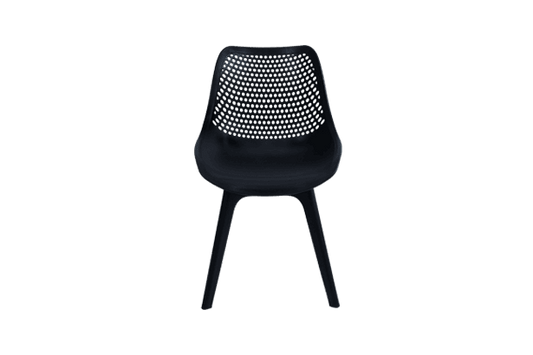
The dining room chair needs to combine adequate back support for meal-duration sitting (typically 20–45 minutes), a seat height that works with your table height, and a design that integrates with your dining room aesthetic. Check that the table-to-seat clearance - the vertical space between seat surface and table underside - is at least 25–30 cm for comfortable thigh clearance.
For a standard Indian dining table height of 74–76 cm, a chair with a seat height of 43–46 cm provides correct posture alignment for most adults. Italica's Oxy Series and Designer Series chairs are designed within this height range and are available in colour combinations that work across modern and transitional Indian dining room interiors.
Kitchen
Kitchen chairs are the hardest-worked seating in most Indian homes - daily use, food spillage, mopping contact, and constant movement for cleaning. The priority is wipe-clean convenience, lightweight handling, and structural durability under daily heavy use. Back support is secondary to practicality here. The Oxy Series plain-back and Cafe Series chairs handle this use case well.
Balcony and outdoor spaces
UV-stabilised polypropylene is the only appropriate material for Indian balcony chairs. Beyond UV stabilisation, look for drainage design in the seat surface, lightweight construction for easy movement, and weather-resistant hardware if any metal components are present. The Designer Series and Oxy Series outdoor-rated variants within Italica's range are designed for this environment. For premium outdoor terrace and pool settings, the Pool and Beach Series and Sunlounger 8106 are the appropriate product direction.
Study and work-from-home
Sustained sitting of four to eight hours daily requires high-back lumbar support, correct seat height for the user's desk, and armrests if desk-based work is the primary use. Italica's Spine Care Series - particularly the 2109 model - is the correct product direction for this room and use case. Do not compromise on back support for study and home office chairs; the long-term postural and health consequences of poor seating in this context are well-documented.
Children's rooms
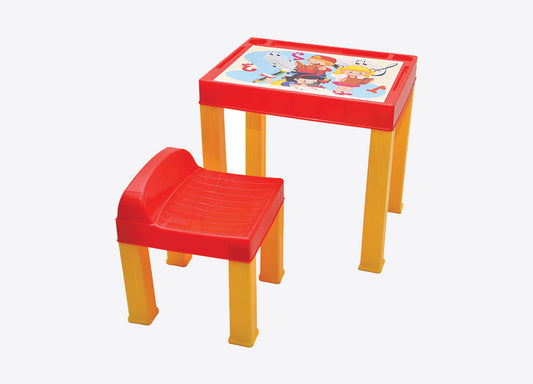
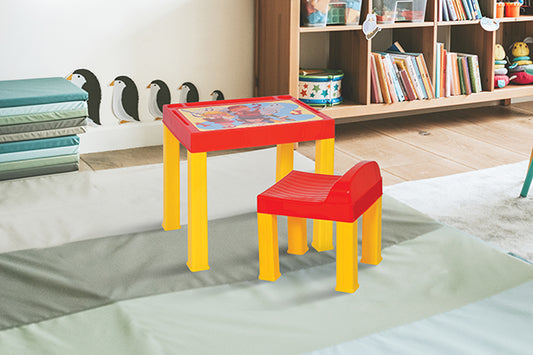
Children's chairs need age-appropriate seat height, lightweight construction that children can manage independently, rounded edges for safety, and surfaces that clean easily after arts, craft, and meal use. Italica's Kids World Series and the 5229 Kids Study Set are designed specifically for Indian children with age-appropriate dimensions and durable easy-clean surfaces.
Guest seating and multi-purpose use
For seating that is deployed for festivals, family gatherings, and events and stored between occasions, stackability is the defining feature. A set of Italica stackable chairs - Oxy Series or Cafe Series - that stacks six to eight units high takes up less floor space than a single sofa cushion and can seat a full family gathering in under two minutes.
How Do You Identify a Good Quality Plastic Chair at the Point of Purchase?
Whether buying in a showroom or online, these are the physical and specification checks that separate quality products from low-grade ones.
Uniform colour throughout. Scratch or press-mark the underside of a seat sample. The colour should be consistent throughout the material depth - not just on the surface. Surface-dyed chairs show a different colour underneath.
No visible moulding defects. Inspect for surface sink marks (small depressions on flat surfaces), short-shot edges (rough or incomplete edges at the mould parting line), and air bubbles in the material. These indicate inconsistent moulding pressure and material quality.
Even wall thickness across all sections. Press on the seat pan centre and each leg with moderate force. A quality chair should feel solid and show no flex. Thin-walled chairs flex noticeably and are the first to crack under load or impact.
Smooth edges throughout. Run your hand along the underside of the seat edge, leg bottoms, and backrest top edge. Quality moulding produces smooth, finished edges. Poor quality moulding leaves sharp flash lines - thin ridges of excess plastic at the mould parting line.
Stated material and weight capacity. A manufacturer confident in their product states the material (virgin polypropylene) and the weight capacity explicitly in the product specification. Absence of these specifications is a red flag.
Brand transparency. Manufacturers like Italica - with 30+ years of production history, named manufacturing facilities in Udaipur and Silvassa, and product series with distinct specifications - give you accountability that anonymous generic products cannot.
Does Your City or Climate Zone Change What You Should Buy?
India's climate diversity means the ideal plastic chair specification genuinely varies by geography.
Coastal cities (Mumbai, Chennai, Kochi, Visakhapatnam, Goa): Salt air accelerates surface degradation and corrodes any metal hardware. Specify fully polypropylene construction with stainless steel or no metal hardware. UV stabilisation is critical year-round, not just in summer. Italica's coastal-market buyers consistently report that non-UV-stabilised chairs degrade within one to two years in these environments.
High-humidity regions (Kerala, West Bengal, Northeast India, Western Ghats): Humidity above 80 per cent for extended periods creates conditions where surface mould and algae develop on any outdoor furniture. Smooth non-porous polypropylene surfaces - as used across Italica's chair range - clean easily and resist sustained mould growth better than textured or woven surfaces.
High UV regions (Rajasthan, Gujarat, Madhya Pradesh, Central India): Some of the most intense UV exposure in India. UV stabilisation is the single most critical specification for any outdoor or semi-outdoor chair in these regions. Titanium dioxide additives in the resin provide the strongest UV protection for extreme sun exposure environments.
North India heat belt (Delhi, Haryana, UP, Bihar): Temperature fluctuations from near-freezing winters to 45°C+ summers stress materials through repeated expansion and contraction cycles. Quality virgin polypropylene handles this thermal cycling well; low-grade plastic chairs crack at the joints after two to three seasons of these temperature extremes.
Conclusion
The right plastic chair for your Indian home is not the cheapest one available - nor is it automatically the most expensive. It is the one correctly specified for your use environment, the people using it, the duration of sitting it needs to support, and the climate conditions it will face.
Virgin polypropylene construction, UV stabilisation for outdoor and semi-outdoor use, the correct backrest height for your sitting duration, appropriate weight capacity for your household, and seat dimensions that fit your table and your users - these are the five specifications that determine whether a plastic chair lasts three years or twelve, whether your back aches after thirty minutes or stays comfortable for three hours, and whether the chair looks the same in year five as it did on purchase day.
Italica's chair range - spanning the Spine Care Series for sustained sitting, the Oxy and Cafe Series for dining and multi-purpose use, the Designer Series for contemporary interiors, the Kids World Series for children, and the Pool and Beach outdoor collection - is built around exactly these specifications for the Indian market. With over 30 years of manufacturing experience from facilities in Udaipur and Silvassa, Italica produces every chair in its range from virgin polypropylene to the specifications that Indian climate conditions demand. Explore the full range at italica.com to find the right chair for every room and use case in your home.
Frequently Asked Questions
Q: How do I choose the right plastic chair for my Indian home?
A: Start by identifying where the chair will be used (indoor, balcony, outdoor), who will use it and for how long at a stretch, and how many you need. For outdoor or balcony use, choose chairs with UV-stabilised virgin polypropylene. For sustained sitting over two hours, prioritise high-back lumbar support. For dining, match seat height (43–47 cm for most Indian adults) to your table height. Always check the stated weight capacity and confirm the manufacturer uses virgin polypropylene rather than recycled material.
Q: What is the best plastic material for chairs in India?
A: Virgin polypropylene with UV stabilisers incorporated into the resin is the best plastic material for chairs in the Indian context. It offers consistent structural properties, colour durability under UV and monsoon conditions, resistance to humidity and moisture, and a non-porous surface that cleans easily. Italica uses virgin polypropylene as the base material across its entire chair range.
Q: What weight capacity should I look for in a plastic chair?
A: Choose a plastic chair with a weight capacity that exceeds your primary user's body weight by 20–30 per cent. Standard residential chairs handle 100–120 kg; premium chairs 120–150 kg; commercial and heavy-duty chairs up to 180 kg. A chair used at its exact rated limit shows accelerated wear - the safety and longevity margin matters. Always verify weight capacity from the manufacturer's stated specification, not from product descriptions that omit this data.
Q: Which Italica chair series is best for a dining table?
A: For dining table use, Italica's Oxy Series and Designer Series are the most appropriate choices. Both offer mid-back support suitable for meal-duration sitting, a seat height range of 43–46 cm compatible with standard Indian dining table heights, and a range of colour options that integrate with contemporary and transitional Indian dining room interiors. For a dining setting that also serves as a work-from-home or study space, the Spine Care Series provides the higher back support needed for extended sitting.
Q: How can I tell if a plastic chair is good quality before buying?
A: Check for uniform colour throughout the material depth (scratch the underside lightly), no visible surface defects like sink marks or rough edges, solid feel with no flex when you press the seat pan, smooth finished edges all around, and an explicitly stated material specification (virgin polypropylene) and weight capacity. Reputable manufacturers like Italica display all of these specifications openly - absence of material and weight data from a product listing is a reliable signal of low-grade manufacturing.