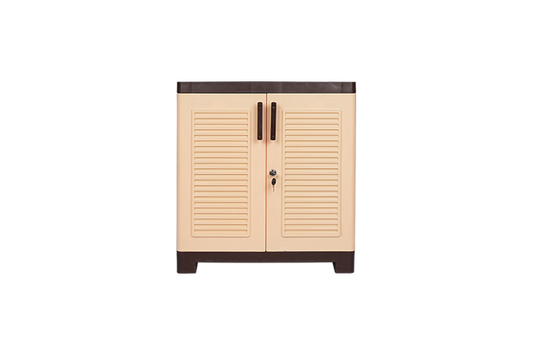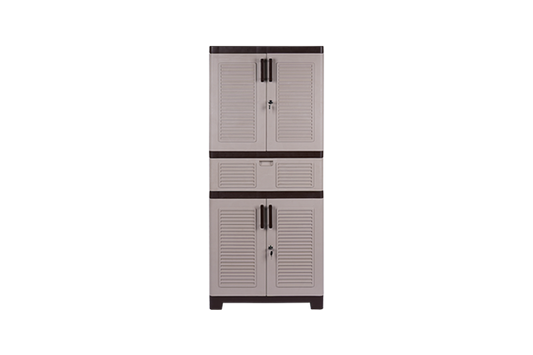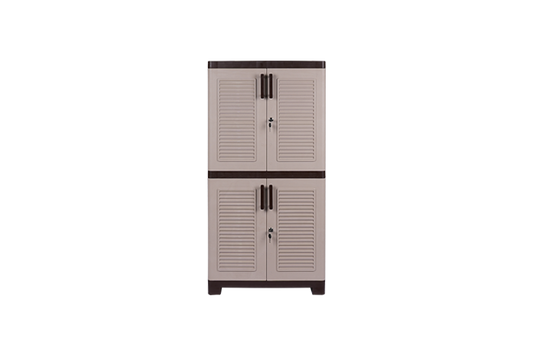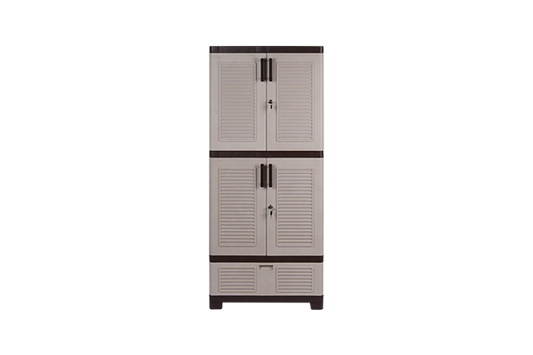


How to Choose the Perfect Plastic Cupboard for Your Home
Share
Plastic cupboard choices have never been more varied - or more important to get right. In 2026, as Indian families navigate shrinking urban floor areas, frequent relocations, and the need to store a growing volume of household belongings, the cupboard has quietly become one of the most decision-critical furniture purchases a homeowner can make. Choose well, and it serves your family reliably for a decade. Choose poorly, and you are dealing with warped doors, sagging shelves, and rust stains within a single monsoon season.
Plastic cupboard products have emerged as the clear frontrunner for Indian homes across climate zones and market segments. They are rust-proof, termite-resistant, moisture-stable, easy to relocate, and require no maintenance - qualities that wood and metal alternatives simply cannot match in India's demanding living conditions. India's organised home storage and furniture market is projected to grow at a CAGR of 10.4% between 2024 and 2029, according to Mordor Intelligence, with plastic storage products driving the fastest-growing sub-segment. Browse Italica's full range of plastic cupboards and cabinets - purpose-built for Indian homes, backed by ISO-certified manufacturing quality.
Plastic cupboard buying is more nuanced than it appears. With dozens of sizes, configurations, material grades, and price points available in the Indian market, knowing what questions to ask - and what to look for - is the difference between a smart purchase and an expensive mistake. This complete guide walks you through every key consideration, step by step.
Why Is a Plastic Cupboard the Best Choice for Indian Homes in 2026?
Plastic cupboard advantages in the Indian context begin with climate resilience. India is one of the world's most climatically diverse countries - spanning arid deserts in Rajasthan, humid tropics in Kerala and West Bengal, temperate hills in Himachal Pradesh and Uttarakhand, and coastal salt-air environments in Tamil Nadu, Maharashtra, and Andhra Pradesh. No single material handles this full range as reliably as quality plastic.
Plastic cupboard resilience against moisture is particularly critical. The National Building Code of India notes that relative indoor humidity in tropical Indian cities regularly exceeds 80% during monsoon months - conditions under which untreated wood swells and warps, MDF delaminates, and metal develops rust. A UV-stabilised polypropylene or HDPE plastic cupboard, by contrast, is completely unaffected by humidity cycles and requires no seasonal treatment or protective coating.
Plastic cupboard portability is another major advantage for India's urban rental market. According to a 2025 report by the National Real Estate Development Council (NAREDCO), approximately 48% of urban Indian households live in rented accommodation, with average tenancy periods of 2–3 years in major metros. For renters who move regularly, the ability to disassemble, transport, and reassemble a lightweight plastic cupboard without specialist help or risk of damage is a practical necessity that wooden furniture cannot offer.
• Completely rust-proof and moisture-resistant - handles India's full humidity range
• Termite and pest-proof - no chemical treatment required unlike wood
• Lightweight and portable - ideal for India's large urban rental population
• No warping, swelling, or delamination across seasonal temperature and humidity cycles
• Zero maintenance - wipes clean with a damp cloth, no polishing or recoating needed
• Faster to assemble and reconfigure than wooden or metal alternatives
How Do You Choose the Right Plastic Cupboard for Your Home? A Step-by-Step Guide
Step 1: Define Your Storage Need Clearly
Plastic cupboard selection should always begin with a precise understanding of what you need to store and how you need to access it. A cupboard for folded clothing has completely different requirements from one for kitchen provisions, bathroom supplies, children's toys, or documents and stationery. List your primary storage items, estimate the volume, and identify whether you need hanging space, flat shelving, drawer sections, or a combination.
Plastic cupboard configurations available in India in 2026 include:
• Single-door compact cupboards - ideal for bathrooms, children's rooms, and small utility areas
• Double-door wardrobe-style cupboards - the standard for bedroom clothing storage
• Three-door or wider cupboards - suited to families with larger clothing and linen storage needs
• Open-shelf configurations - useful for kitchen provisions, books, or display storage
• Combination designs with shelves, hanging rails, and drawer sections - maximum versatility for bedroom use
Step 2: Measure Your Available Space
Plastic cupboard dimensions vary significantly across the Indian market, and buying without measuring is one of the most common - and costly - furniture mistakes Indian homeowners make. Before browsing products, measure the width, depth, and height of the intended placement space, including ceiling height clearance, door swing radius (for hinged-door models), and proximity to walls, windows, and other furniture.
Standard plastic cupboard dimensions commonly available in India in 2026:
• Compact single-door: approximately 45–55 cm wide x 40–45 cm deep x 150–160 cm tall
• Standard double-door: approximately 80–100 cm wide x 45–50 cm deep x 170–180 cm tall
• Wide three-door: approximately 120–150 cm wide x 50–55 cm deep x 175–185 cm tall
• Sliding-door designs: available in widths from 90–160 cm - useful where door swing clearance is limited
Step 3: Choose the Right Material Grade
Plastic cupboard quality is directly determined by the polymer grade used in manufacturing. The Indian market in 2026 includes products across a wide quality spectrum - from virgin-grade co-polymer and HDPE products from ISO-certified domestic manufacturers to lower-cost imports using recycled or mixed-grade plastic. Understanding the difference protects your investment.
• Virgin-grade polypropylene (PP): The standard for quality domestic plastic cupboards - consistent strength, colour stability, and chemical safety
• High-density polyethylene (HDPE): Superior impact resistance and moisture resistance - preferred for heavy-duty and outdoor-adjacent use
• Co-polymer blends: Enhanced flexibility and durability compared to standard homo-polymer - common in premium Indian brands
• Avoid: recycled or unlabelled plastic - inconsistent quality, colour variation, and potential chemical safety concerns
At Italica, we focus on using only virgin-grade polymer raw materials across our entire cupboard range. Our co-polymer and HDPE formulations are selected for maximum performance in India's climatic conditions, and every raw material batch is tested before production to ensure consistency and safety.
Step 4: Evaluate Load Capacity and Structural Engineering
Plastic cupboard structural performance is only as good as its engineering. A cupboard may look robust but have inadequate shelf support spans, thin wall panels, or weak hinge-mounting points that fail under regular loading. Before purchasing, check the manufacturer's specified shelf load capacity - for a clothing cupboard, a minimum of 10–15 kg per shelf is reasonable; for a kitchen provisions or utility cupboard, look for 15–20 kg or more per shelf.
Plastic cupboard base stability is equally important. A wide, well-designed base prevents tipping - critical in homes with young children. Check whether the cupboard's centre of gravity is appropriately low and whether wall-fixing options are available for additional safety in earthquake-prone regions of India such as Gujarat, Uttarakhand, and parts of Maharashtra.
Step 5: Assess Door Mechanism and Locking Quality
Plastic cupboard doors and their mechanisms are often where quality diverges most sharply between products in the Indian market. Poorly engineered hinges and latches fail within months of regular use, leaving doors that sag, misalign, or refuse to close properly. Evaluate:
• Hinge type: injection-moulded reinforced hinges or steel-pin hinges outlast simple snap-fit plastic alternatives significantly
• Latch mechanism: magnetic push-close or robust click-close latches are preferable to friction-only or hook-and-eye closures
• Door alignment: check that door panels sit flush and even when closed - uneven doors indicate either manufacturing inconsistency or inadequate structural rigidity
• Handle quality: moulded-in handles are more durable than separately attached handles with visible screw fittings
Which Plastic Cupboard Type Works Best for Each Room in an Indian Home?
Plastic cupboard selection benefits enormously from a room-by-room approach, because the functional demands, size constraints, and environmental conditions of each room in an Indian home differ significantly. Here is a practical room-by-room guide:
Bedroom
Plastic cupboard for the bedroom should prioritise adequate hanging rail length for garments, adjustable shelving for folded clothing and accessories, and a full-height mirror option if the bedroom lacks a dedicated dressing space. Double and triple door models with internal organisation features - divided compartments, small drawers, and a combination of hanging and folded-storage sections - deliver the most practical bedroom storage in India's 2BHK and 3BHK apartment formats.
Kitchen
Plastic cupboard for the kitchen requires robust shelf load capacity, ventilated side panels to prevent humidity and odour build-up around stored provisions, and a non-porous internal surface that is easy to clean after spills of oil, dal, or masala. Compact single-door or double-door kitchen utility cupboards in heights of 150–170 cm offer the most practical fit for the narrow service corridors and utility walls common in Indian apartment kitchens.
Bathroom
Plastic cupboard for the bathroom faces the most demanding moisture environment in the home. Choose a compact single-door or wall-adjacent design with enclosed back panel to prevent wall moisture ingress, and look specifically for mould-resistant polymer formulations. Bathroom cupboards in India are typically smaller - 45–60 cm wide - and should be positioned away from direct shower splash zones even if the material is water-resistant.
Children's Room
Plastic cupboard for a child's room should combine clothing storage with toy and activity organisation. Lower shelf access points - reachable by the child independently - encourage organisational habits from an early age. Bright colour options help children associate their cupboard with their personal space, and fully rounded edge profiles with no sharp corners are a non-negotiable safety requirement for furniture in children's rooms.
Living Room and Home Office
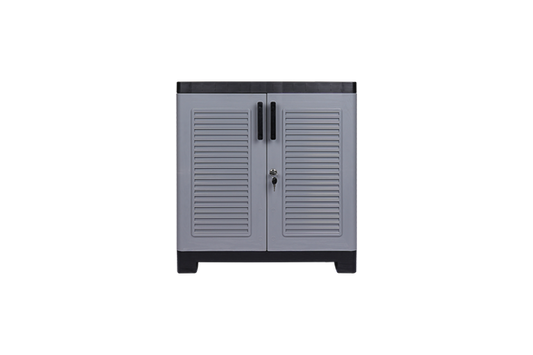
Plastic cupboard for living rooms and home office areas serves a different purpose - document storage, stationery, electronics accessories, and occasionally display. Closed-door designs with a cleaner aesthetic - in white, grey, or wood-effect finishes where available - are preferred for these more visible spaces. A compact two-shelf closed cupboard with a lockable door is the most practical configuration for sensitive documents and home office supplies.
How Does Italica Ensure Quality in Its Plastic Cupboard Range?
Plastic cupboard quality begins long before the product reaches the retail shelf - it starts with raw material selection, polymer formulation, and the precision of the injection moulding process. Italica's advanced manufacturing facilities ensure that every cupboard panel, door, hinge mounting point, and shelf support is produced to consistent dimensional specifications that translate directly into structural stability, door alignment, and long-term performance in the home.
Plastic cupboard manufacturing at Italica is governed by an ISO-certified quality management system that covers every stage of production. Raw material batches are tested before processing. Injection moulding parameters are monitored continuously for cavity pressure and temperature consistency. Finished products undergo load testing at 1.5x rated capacity, door mechanism cycle testing, and surface quality inspection before every batch is approved for dispatch.
According to Italica's 2026 market insights, the three most common quality complaints from Indian consumers about plastic cupboards purchased from unverified sources are shelf sagging under load, door misalignment after 6–12 months of use, and surface discolouration from UV exposure near windows. All three are direct consequences of under-engineered products - and all three are eliminated by the manufacturing standards Italica applies to every product in our range.
• Virgin-grade polymer raw materials - consistent strength and chemical safety
• ISO-certified manufacturing with documented process controls at every stage
• Load testing at 1.5x rated capacity for all shelving and structural components
• Door mechanism cycle testing to ensure long-term hinge and latch reliability
• UV stabilisation for colour retention in India's high-solar-radiation environments
• BIS compliance for all applicable product categories
How Are Retailers and Distributors Maximising the Plastic Cupboard Opportunity in India in 2026?
Plastic cupboard retail is one of the most consistently performing categories in India's organised home products market. Unlike seasonal or trend-driven furniture categories, cupboard demand is structurally driven by housing construction, household formation, and the replacement cycle of existing storage furniture - all of which are growing steadily as India's urban population expands and household incomes rise.
Plastic cupboard demand from India's housing sector is particularly strong. The Ministry of Housing and Urban Affairs' Pradhan Mantri Awas Yojana (Urban) programme has delivered over 1.18 crore homes since its inception, with ongoing construction creating a continuous pipeline of new households requiring first-time furniture and storage solutions. For retailers in Tier 2 and Tier 3 cities - the primary delivery markets for PMAY-U homes - plastic cupboards are among the highest-volume first-purchase furniture items.
For distributors covering the B2B and institutional segment, plastic cupboards serve an expanding market of hostels, paying guest accommodations, dormitories, government offices, and healthcare facilities that procure storage furniture in bulk. Institutional buyers value the consistent quality, reliable supply, and low maintenance characteristics of plastic cupboards - making long-term supply relationships with quality manufacturers a strategically valuable distribution asset.
• Housing construction pipeline drives first-purchase furniture demand in Tier 2 and Tier 3 markets
• PMAY-U and affordable housing projects create significant volume in entry and mid-market cupboard segments
• Institutional segment - hostels, PG accommodations, government offices - drives bulk B2B procurement
• Replacement cycle demand provides recurring revenue as households upgrade storage after 8–10 years
• Lightweight products minimise freight costs and simplify last-mile distribution across diverse Indian geographies
Frequently Asked Questions (FAQ)
Q1. How long does a plastic cupboard last in India?
A high-quality plastic cupboard made from virgin-grade UV-stabilised polypropylene or HDPE typically lasts 8–12 years under normal indoor use in Indian conditions. Cupboards placed near windows with direct sun exposure will have a longer colour life when made with UV-stabilised polymer. Avoid placing plastic cupboards in areas with prolonged direct flame or heat sources above 60°C.
Q2. Can a plastic cupboard hold heavy clothing and linen?
Yes. Quality plastic cupboards from reputable Indian manufacturers are designed with shelf load capacities of 10–20 kg per shelf depending on the model. For heavy clothing, thick quilts, or linen storage, choose a cupboard with specified shelf load capacity of at least 15 kg per shelf and reinforced shelf support brackets or thicker moulded shelf panels.
Q3. Are plastic cupboards suitable for humid cities like Mumbai, Chennai, and Kochi?
Yes. This is where plastic cupboards offer their most significant advantage over wood and metal. Plastic is completely moisture-stable - it does not absorb water, swell, warp, or develop rust or mould on the surface. For coastal cities with year-round high humidity, a quality plastic cupboard is the most practical and durable storage solution available.
Q4. How do I clean and maintain a plastic cupboard?
Plastic cupboards require minimal maintenance. Wipe down internal and external surfaces with a damp cloth and mild detergent periodically. For stubborn stains, a gentle all-purpose cleaner works effectively. Avoid abrasive scrubbers that may scratch the surface finish. No polishing, oiling, recoating, or pest treatment is required - ever.
Q5. Can I assemble a plastic cupboard myself?
Yes. Most plastic cupboards from quality Indian manufacturers are designed for straightforward self-assembly using tool-free snap-fit systems or simple bolt-and-wing-nut connections. Assembly typically takes 20–40 minutes for a single adult, with no specialist tools or professional installation required. Always follow the manufacturer's assembly instructions to ensure correct structural alignment and load distribution.
Q6. Where can I find Italica's plastic cupboard range in India?
Italica's plastic cupboards are available through authorised retailers and distributors serving metro cities and Tier 2 and Tier 3 markets across India. Explore the complete range at Italica's plastic cabinets and cupboard collection to find the right size, configuration, and design for your home or institution.
Conclusion: Choose Smart, Choose Quality, Choose the Right Plastic Cupboard for Your Home
Plastic cupboard selection is a decision that affects your home's organisation, aesthetics, and daily functionality for a decade or more. The good news is that in 2026, Indian buyers have access to a genuinely excellent range of quality plastic cupboards - engineered for India's climate, sized for India's homes, and manufactured to standards that deliver reliable long-term performance.
Plastic cupboard buying done right means starting with a clear storage need, measuring your space accurately, choosing the correct material grade, evaluating structural and door mechanism quality, and purchasing from a manufacturer you can trust. Follow these steps, and your plastic cupboard will serve your family efficiently and reliably through every season, every move, and every stage of your household's growth.
Ready to find your perfect storage solution? Discover the full range of quality-certified plastic cupboards at Italica Plastic Cabinets - designed for Indian homes, built to last.