

Best Plastic Chairs With Back Support for Long Sitting in India (2026)
Share
Back pain has become one of the most common health complaints among working Indians - and the chair you sit on every day is one of the biggest reasons why. A 2024 report by the Indian Spinal Injury Centre estimates that nearly 80 per cent of Indians experience back pain at least once in their lifetime, with over 10 million new spine-related cases reported every year. Orthopaedic specialists consistently point to one cause: sitting for 8 to 10 hours continuously in chairs that offer no meaningful back support.
The good news is that the right chair makes a measurable difference. And in 2026, you do not need to spend a fortune to get it right. Quality plastic chairs with engineered back support - designed specifically for Indian homes, offices, and work-from-home setups - are more accessible than ever.
This guide breaks down exactly what to look for, which features genuinely matter for long sitting, and how to choose the right chair for your needs and space.
Why Does Back Support Matter So Much for Long Sitting?
The human spine is not designed to stay in one position for hours. It has a natural S-curve - a lumbar (lower back) curve that bows inward, and a thoracic (upper back) curve that bows outward. When you sit in a chair without back support, your lower back gradually loses that inward curve, your pelvis tilts backward, and your spine rounds into a C-shape. Hold that position for four to eight hours and the result is muscle fatigue, disc compression, and eventually chronic pain.
Clinics across India have seen a 40 to 60 per cent increase in work-related cervical and lumbar issues since the normalisation of remote working arrangements. The problem is not sitting itself - it is sitting in the wrong chair for too long.
A chair with proper back support maintains the lumbar curve without you having to actively hold it. Your muscles relax, your posture stays aligned, and you can sit for significantly longer without discomfort.
What Features Should a Plastic Chair Have for Long Sitting?
Not all back support is created equal. Here is what to look for specifically in plastic chairs designed for extended sitting.
Does the backrest follow the natural curve of the spine?
This is the single most important feature. A flat backrest gives you no lumbar support at all - it simply stops you from falling backward. A contoured backrest that curves inward at the lumbar region (roughly the lower third of the back) actively supports your spine in its natural position.
Look for chairs described as having a lumbar curve, S-curve backrest, or anatomical backrest profile. Italica's Spine Care Series is built around exactly this principle - the backrest geometry is designed to follow the S-curve of the spine rather than force the back to conform to a flat surface.
How tall should the backrest be for long sitting?
For dining and casual use, a mid-back chair (backrest height of 40–50 cm from seat) is generally sufficient. For prolonged sitting - study, work-from-home, or desk work - a high-back or tall-back design that supports the full length of the spine, from lumbar to upper back, is significantly more comfortable over multi-hour sessions.
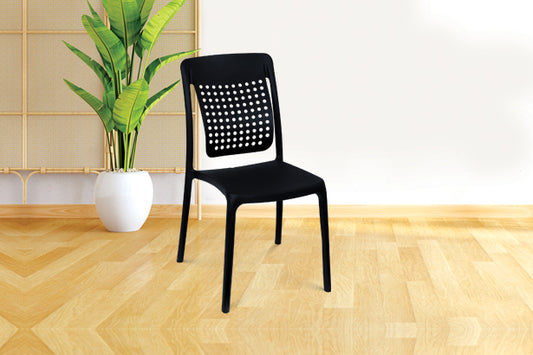
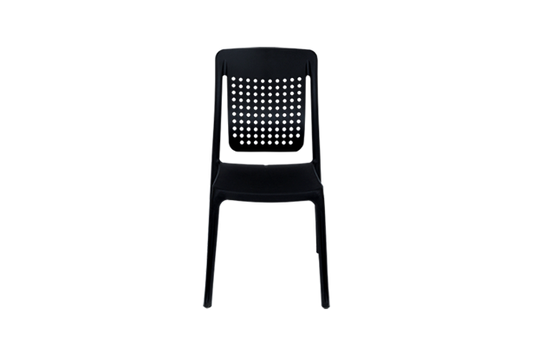
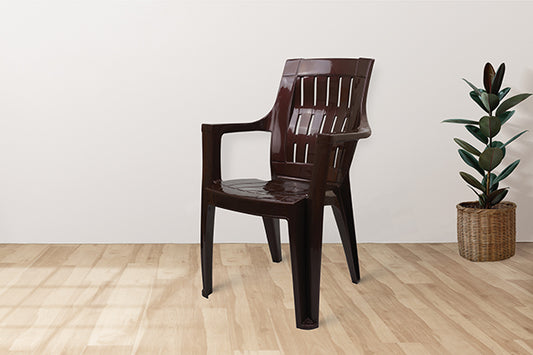
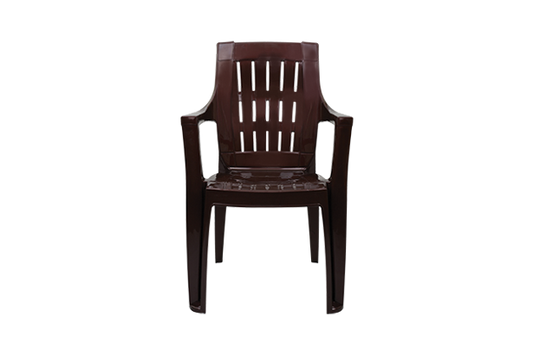
Italica's 2109 and 2277 Spine Care chairs both feature extended backrest profiles that cover the lumbar and mid-back zones, making them suitable for work-from-home setups and study environments.
What is the correct seat height for a plastic chair?
Seat height directly affects how your lower back is loaded. Ideally, your seat height should allow both feet to rest flat on the floor with your knees at a 90-degree angle. For most Indian adults, this falls between 43 cm and 47 cm (17–18.5 inches) from floor to seat.
A seat that is too high forces your feet to hang, cutting off circulation and rotating the pelvis forward. A seat that is too low pushes the knees above hip level, tilting the pelvis backward and flattening the lumbar curve. Both positions cause back pain over time.
Should you choose a plastic chair with armrests for long sitting?
Armrests reduce strain on the neck, shoulders, and upper back by supporting the weight of your arms - which is roughly 10 per cent of your total body weight. Over a long sitting session, that support makes a noticeable difference in upper back and shoulder fatigue.
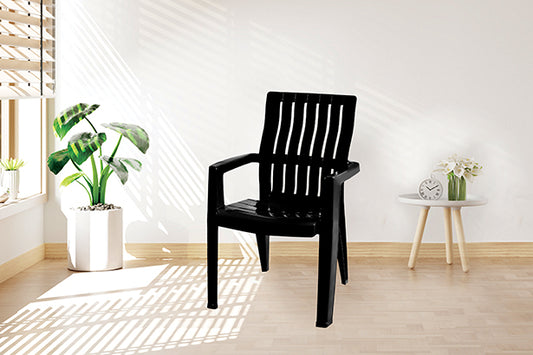
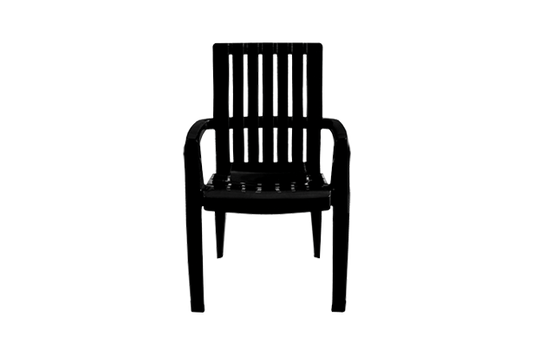
If you are using the chair primarily for desk work or studying, armrests are a worthwhile feature. If the chair needs to tuck under a table or be used in multiple positions, armless designs offer more flexibility. Italica offers both configurations across its Spine Care and Designer Series ranges.
What seat width and depth work best?
A seat that is too narrow creates pressure on the thighs. A seat that is too shallow fails to support the full length of the thigh, which causes the lower back to carry more of the body's weight. For most Indian adults, a seat depth of 40–44 cm and a width of 44–48 cm provides comfortable support without restricting movement.
How Do Plastic Chairs Compare to Wooden and Metal Chairs for Long Sitting?
The material of a chair affects not just durability but comfort over extended periods. Here is how the three most common chair materials compare for all-day Indian use.
|
Feature |
Quality Plastic Chair |
Wooden Chair |
Metal Chair |
|
Back support quality |
Good (if contoured) |
Variable |
Usually poor |
|
Seat comfort over 4+ hours |
Good |
Variable |
Poor |
|
Maintenance in Indian humidity |
Excellent |
Moderate (swells, cracks) |
Poor (rusts) |
|
Weight |
Very light |
Heavy |
Moderate |
|
Stackability |
Excellent |
Poor |
Moderate |
|
Cleaning ease |
Excellent |
Moderate |
Good |
|
Suitable for outdoor/balcony use |
Yes |
Limited |
Limited |
|
Lifespan with daily use |
8–12 years (premium) |
10–15 years |
5–10 years |
For Indian households and work-from-home setups, quality plastic chairs offer a strong combination of ergonomic back support, low maintenance, and climate resilience. Wood performs well structurally but is vulnerable to India's humidity and temperature swings. Metal chairs rarely offer the contouring needed for back support.
Italica positions its plastic chair range as a practical alternative to both - delivering ergonomic geometry in a material that performs reliably through Indian monsoons, dusty summers, and daily household use.
Which Italica Chair Series Is Best for Long Sitting?
Italica's product range includes several series specifically engineered for extended comfort.
Spine Care Series
The Spine Care Series - including the 2109 and 2277 models - is Italica's most targeted solution for long sitting. These chairs feature a high contoured backrest designed to support the lumbar and mid-back regions, a slightly reclined backrest angle that reduces forward pressure on the spine, and a seat profile that distributes weight evenly across the thigh.
The 2109 is available in multiple colours and is suitable for home dining, study spaces, and work-from-home setups. The 2277 offers a slightly more compact profile while retaining the same lumbar engineering - a good choice for smaller rooms or multi-use spaces.
Oxy Series
The Oxy Series - including the widely used 5202, 5205, and 5214 models - is Italica's highest-volume everyday chair range. These chairs feature a gently contoured backrest, a comfortable seat pan, and a balanced ergonomic profile suited to dining and moderate sitting periods of two to four hours.
If your primary use is meal times, casual seating, or occasional desk work, the Oxy Series delivers a well-priced, durable option with adequate back support for normal daily use.
Designer Series
The Designer Series, including the popular 5106 and 5115 models, combines aesthetic design with structural back support. These chairs use a sculpted backrest that follows the upper and mid-back curve, and are available in colour combinations suited to both contemporary and traditional Indian interiors.
For living room or drawing room use where appearance matters as much as comfort, the Designer Series is Italica's recommended choice.
How Should You Set Up a Plastic Chair Correctly for Long Sitting?
Even the best-designed plastic chair will not prevent back pain if it is used incorrectly. These setup principles apply universally.
Feet flat on the floor. If your feet do not reach the floor comfortably, place a footrest, a firm cushion, or a low stool underneath. Suspended feet create pressure behind the knee and tilt the pelvis incorrectly.
Hips pushed back. Sit all the way back in the chair so your lower back makes contact with the lumbar support of the backrest. Perching on the front half of the seat removes all back support.
Screen at eye level. If you are using a laptop or monitor, the top of the screen should be at or just below eye level. Looking down at a screen on a table causes neck flexion that stresses the cervical spine - no chair design fully compensates for this.
Take a movement break every 45 to 60 minutes. Even with excellent back support, continuous sitting for more than an hour is physiologically stressful. Stand, walk briefly, or stretch for two to three minutes. This is not optional - it is what keeps your spine healthy regardless of which chair you use.
Italica's Spine Care Series is designed to make correct posture the default position - the chair's geometry guides you into alignment rather than requiring active effort to maintain it.
What Is the Best Plastic Chair for Work-From-Home Use in India?
For work-from-home professionals sitting six to ten hours daily, these are the non-negotiable criteria.
High or mid-back contoured backrest - full spine support for multi-hour sessions. Stable four-leg base - no wobble under dynamic movement like reaching, leaning, or shifting weight. Appropriate seat height - at or around 43–47 cm for most Indian adults. Armrests - highly recommended for desk-based work; significantly reduces shoulder and neck fatigue over long sessions. Easy cleaning - Indian summers and humid monsoons mean you will sweat in a chair; wipe-clean polypropylene surfaces are far more hygienic than fabric over time.
The Italica 2109 Spine Care chair satisfies all five criteria and remains one of the best-reviewed ergonomic plastic chairs in its category on Indian e-commerce platforms. With over 90 customer reviews at 4.99 out of 5, it has established a strong track record across home office users and students alike.
Conclusion
Choosing a plastic chair with proper back support is not a small decision when you are sitting in it for six to ten hours every day. The right chair actively protects your spine, reduces fatigue, and keeps you comfortable through long study and work sessions. The wrong one quietly causes damage that takes months to correct.
Focus on lumbar contour, backrest height, seat depth, and correct setup - and you will get far more value from any chair you choose. Italica's Spine Care Series is designed from the ground up to meet these criteria in a durable, Indian-climate-ready, wipe-clean design that works for homes, home offices, and commercial spaces equally well. Explore the full Spine Care and chair range at italica.com to find the right fit for your space and sitting habits.
Frequently Asked Questions
Q: Which plastic chair is best for long sitting in India?
A: For long sitting, look for plastic chairs with a contoured lumbar backrest, a high or mid-back profile, and a seat height of 43–47 cm. Italica's Spine Care Series - particularly the 2109 and 2277 models - is specifically designed for extended sitting with an ergonomic backrest that follows the natural S-curve of the spine.
Q: Can a plastic chair be good for back pain?
A: Yes, a well-designed plastic chair with a contoured backrest that supports the lumbar region can significantly reduce back pain compared to flat-backed or unsupported seating. The key is lumbar contouring - a flat backrest, regardless of material, provides no meaningful spinal support. Quality plastic chairs from manufacturers like Italica use anatomically shaped backrests that actively maintain correct posture.
Q: What is the correct seat height for a plastic chair for desk work?
A: For most Indian adults, the ideal seat height for desk work is 43–47 cm (17–18.5 inches) from the floor. At this height, both feet rest flat on the floor with knees at a 90-degree angle, which allows the pelvis to sit in a neutral position and the lumbar curve to be properly supported.
Q: What is the difference between a Spine Care chair and a regular plastic chair?
A: A Spine Care chair - such as those in Italica's dedicated Spine Care Series - features a backrest specifically shaped to follow the natural S-curve of the human spine, with pronounced lumbar contouring in the lower third of the back. A regular plastic chair typically has a flat or minimally curved backrest that provides surface contact but no active postural support.
Q: How long can you sit comfortably in a plastic chair with back support?
A: With a properly contoured plastic chair and correct posture setup, most adults can sit comfortably for 90 minutes to two hours before requiring a movement break. No chair - regardless of material or price - eliminates the need for regular standing and movement breaks. Spine specialists recommend a two-to-three-minute break every 45 to 60 minutes for anyone sitting for extended periods.