

7 Smart Reasons Plastic Chairs Are Perfect for Everyday Use
Share
Plastic chairs have come a long way from the basic, utilitarian seats of the 1990s. In 2026, they are a cornerstone of everyday life across India - found in family dining rooms in Jaipur, school canteens in Coimbatore, hotel lobbies in Goa, and office waiting areas in Gurugram. Lightweight, weather-resistant, easy to clean, and available in a variety of contemporary designs, today's plastic chairs are a genuinely smart choice for homes, institutions, and commercial spaces alike.
India's furniture market is projected to reach USD 37.7 billion by 2028, according to Statista, with plastic furniture consistently holding a leading share of the organised segment due to its combination of value, versatility, and low maintenance. Whether you are outfitting a new home, stocking a retail store, or placing a bulk institutional order, understanding why plastic chairs remain India's most trusted everyday seating solution is worth your time. Explore Italica's complete range of plastic chairs - engineered for Indian lifestyles, climates, and commercial demands.
Plastic chairs are no longer just a budget option. They represent a mature, design-evolved product category that delivers practical value at every level of the market. Here are seven compelling, evidence-backed reasons why they remain the smartest everyday seating choice in India in 2026.
Reason 1: Why Are Plastic Chairs the Most Durable Everyday Seating Option in India?
Plastic chairs built with UV-stabilised co-polymer or high-density polyethylene (HDPE) are engineered to handle India's most demanding environmental conditions. From the scorching summers of Vidarbha and Rajasthan to the high-humidity coastal climates of Kerala and Odisha, quality plastic chairs resist warping, rusting, swelling, and fading - common failure points for wood and metal alternatives.
Plastic chairs meeting BIS IS 14630 standards are tested for impact resistance, load-bearing capacity, and UV exposure tolerance, ensuring a reliable service life of 7–10 years under normal use conditions. This durability profile makes plastic chairs a particularly smart investment for commercial buyers who need furniture to withstand heavy daily use.
At Italica, we focus on using advanced polymer formulations and precision injection moulding to produce chairs that meet and exceed BIS load-bearing standards. Each chair is tested at 1.5x its rated capacity to ensure safety and structural integrity across every batch.
- Resistant to rust, moisture, termites, and UV degradation
- No seasonal swelling or cracking unlike wood
- Scratch-resistant surfaces ideal for high-traffic areas
- Long service life reduces total cost of ownership
Reason 2: How Do Plastic Chairs Make Cleaning and Maintenance Effortless?
Plastic chairs require virtually no maintenance - a key advantage for busy Indian households, school administrators, restaurant owners, and facility managers. Unlike upholstered chairs that trap dust and allergens, or wooden chairs that need periodic polishing and pest treatment, plastic chairs can be cleaned with a damp cloth or a quick rinse in seconds.
Plastic chairs are non-porous, which means spills, stains, and food residue do not penetrate the surface. This makes them the preferred choice for dining areas, children's spaces, canteens, and outdoor settings where hygiene and ease of cleaning are non-negotiable. In a country where dust, humidity, and heavy daily use are everyday realities, this property alone is a significant functional advantage.
For institutional buyers - schools, hospitals, government offices, and community halls - low maintenance translates directly into reduced operational costs. There is no need for specialised cleaning products, refinishing, or annual upkeep budgets.
Reason 3: Why Are Plastic Chairs the Smartest Choice for Space-Saving in Indian Homes?
Plastic chairs designed with stackability in mind are a game-changer for space management - especially in urban Indian homes where living areas are compact. A set of four stackable plastic chairs can be stored in a corner, a balcony, or under a staircase when not in use, freeing up valuable floor space that rigid wooden or metal chairs permanently occupy.
Plastic chairs in stackable configurations can be nested 6–10 units high, which also makes them the practical choice for event management companies, caterers, banquet halls, and wedding venues that routinely set up and dismantle hundreds of chairs in a single day. The ability to store large quantities in minimal space is a direct operational efficiency that non-stackable alternatives simply cannot match.
According to Italica's 2026 market insights, stackable plastic chairs account for over 55% of all institutional and commercial chair orders in India, reflecting the central importance of space efficiency in the buying decision for this segment.
- Stack 6–10 units high for compact storage
- Ideal for small apartments, balconies, and multi-use rooms
- Essential for event management, catering, and hospitality operations
- Lightweight enough for one person to move and rearrange easily
Reason 4: How Do Plastic Chairs Serve Both Indoor and Outdoor Settings Equally Well?
Plastic chairs are one of the few furniture categories that perform equally well indoors and outdoors - a versatility that is especially valuable in India, where semi-outdoor living spaces like balconies, courtyards, verandas, and rooftop terraces are central to everyday life. UV-stabilised plastic chairs retain their colour and structural integrity even after years of outdoor exposure, making them a reliable year-round seating solution.
Plastic chairs in commercial and hospitality settings are used across restaurant terraces, hotel poolsides, school playgrounds, temple halls, and community event spaces. Their weather resistance means there is no need to bring chairs indoors during the monsoon or cover them during summer - they simply endure, season after season.
Italica's advanced manufacturing facilities ensure that every plastic chair in our outdoor-capable range undergoes rigorous UV exposure and weathering tests before reaching the market, giving buyers the confidence that their investment will hold up through India's full climatic range - from the Himalayan foothills to coastal Tamil Nadu.
Reason 5: Why Are Plastic Chairs the Top Choice for Bulk and Institutional Buyers in India?
Plastic chairs dominate the bulk and institutional procurement segment in India for a combination of practical reasons that no other seating material can fully replicate. Schools, colleges, hospitals, government offices, railway waiting areas, community centres, and religious institutions all rely on plastic chairs because they deliver consistent quality at scale, ship efficiently, and require no assembly or installation.
Plastic chairs are the dominant choice in the institutional education segment. India has over 14.7 lakh schools according to the Ministry of Education's UDISE+ 2024–25 data, the vast majority of which require periodic furniture replacement as student enrolments grow. Plastic chairs are selected for their durability, hygiene-friendliness, and consistent availability from organised domestic manufacturers.
For B2B buyers and distributors, plastic chairs also offer significant logistical advantages. Their light weight reduces freight costs substantially compared to metal or wooden chairs of equivalent strength, and stackable designs maximise the number of units per truck load - directly improving supply chain economics for distributors covering Tier 2 and Tier 3 markets.
- No assembly required - ready to use immediately upon delivery
- Lightweight design reduces freight and handling costs for bulk orders
- Stackable configurations maximise truck load efficiency
- Consistent batch quality from ISO-certified manufacturers
- Available in large quantities with reliable lead times from domestic producers
Reason 6: How Are Plastic Chairs Evolving in Design to Meet Modern Indian Tastes in 2026?
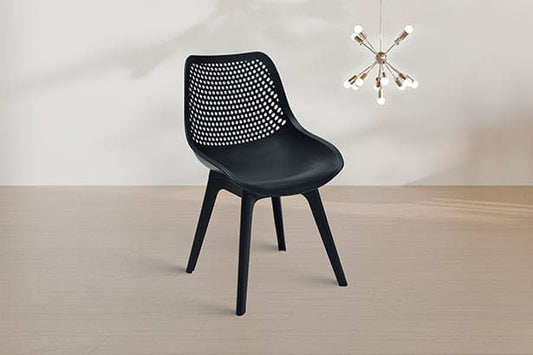
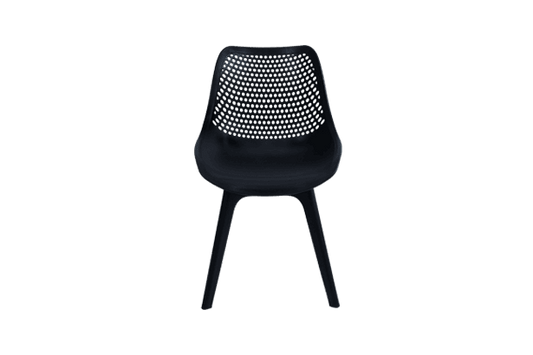
Plastic chairs in 2026 are far removed from the monolithic white chair of earlier decades. Contemporary plastic chair design has embraced ergonomic seating principles, muted and nature-inspired colour palettes, textured surfaces that mimic rattan or woven patterns, and slim-profile silhouettes that complement modern interior design aesthetics in Indian homes and hospitality spaces.
Plastic chairs design trends in India in 2026 include:
- Ergonomic lumbar support integrated into the chair back for improved comfort in extended seating
- Premium matte finishes and multi-tone colour combinations replacing basic gloss surfaces
- Slim-leg profiles and sculpted seat shells inspired by contemporary Asian and Scandinavian design
- Textured anti-slip seat surfaces for safety in kitchens, schools, and elderly care settings
- Armrest variants in both full-arm and half-arm configurations for different use cases
At Italica, we focus on staying ahead of design trends through continuous product development, regular market research, and close collaboration with interior designers and institutional buyers across India. Our 2026 chair collection reflects both aesthetic evolution and functional precision - ensuring our products appeal to style-conscious urban homeowners as much as to volume-driven commercial buyers.
Reason 7: Why Are Plastic Chairs the Most Accessible Seating Solution Across India's Diverse Markets?
Plastic chairs reach where other furniture categories cannot. India's retail furniture distribution is concentrated in metros and large cities for premium product categories, but plastic chairs have a uniquely broad market footprint - available in hardware stores, home décor outlets, and general merchandise shops across the country's 640+ districts.
Plastic chairs from organised domestic manufacturers like Italica are distributed through national networks serving everything from modern retail chains in Mumbai and Delhi to wholesale markets in Ludhiana, Surat, Nagpur, Bhopal, and Visakhapatnam. The result is consistent product availability, faster replenishment for retailers, and reliable supply for institutional buyers regardless of geography.
According to data from the Ministry of Commerce and Industry's Annual Survey of Industries 2024–25, India's plastic products manufacturing sector employs over 1.8 million workers and contributes significantly to the organised furniture supply chain - providing a robust foundation for nationwide product availability and quality standards.
For distributors and retailers in Tier 2 and Tier 3 markets, plastic chairs represent one of the most reliable high-turnover product categories in the furniture segment, with strong repeat purchase cycles driven by institutional procurement, seasonal home renovation, and ongoing commercial expansion in growing cities.
Frequently Asked Questions (FAQ)
Q1. Are plastic chairs safe and sturdy enough for daily use?
Yes. High-quality plastic chairs from BIS-compliant manufacturers are load-tested to handle standard adult weight capacities - typically 110 to 150 kg depending on the model - and are designed for repeated daily use across years of service. Look for chairs that meet IS 14630 standards for assurance of structural safety.
Q2. What is the weight capacity of a standard plastic chair?
Most standard plastic chairs in India have a rated weight capacity of 110 to 130 kg. Commercial-grade and heavy-duty models can support up to 150 kg or more. Always check the manufacturer's specifications when purchasing for institutional or commercial use.
Q3. How do I choose the right plastic chair for outdoor use in India?
For outdoor use in India, choose a plastic chair made from UV-stabilised co-polymer or HDPE material. Check that the chair has been tested for UV exposure and weathering resistance. Avoid basic polypropylene chairs for permanent outdoor placement, as these may fade or become brittle with prolonged sun exposure.
Q4. Can plastic chairs be recycled at the end of their life?
Yes. Most plastic chairs manufactured in India are made from recyclable thermoplastics such as polypropylene (PP) or high-density polyethylene (HDPE). At end of life, they can be processed through plastic recycling channels, contributing to a circular economy and reducing landfill waste.
Q5. How does Italica ensure the quality of its plastic chairs?
Italica's advanced manufacturing facilities ensure quality through end-to-end control - from raw material selection and polymer formulation to precision injection moulding, load testing, UV resistance testing, and surface finish inspection. All products are manufactured in ISO-certified facilities and comply with applicable BIS standards for plastic furniture.
Q6. What types of plastic chairs does Italica offer?
Italica offers a comprehensive range of plastic chairs including stackable dining chairs, armchairs, heavy-duty commercial chairs, children's chairs, and outdoor garden chairs. Explore the full collection at italica to find the right model for your home, business, or bulk procurement requirement.
Conclusion: Plastic Chairs Remain India's Smartest Everyday Seating Investment in 2026
Plastic chairs have earned their place as India's most versatile, practical, and trusted everyday seating solution - not by default, but through genuine performance advantages that continue to improve with every generation of manufacturing innovation. From unmatched durability and effortless maintenance to space-saving stackability, design evolution, and nationwide accessibility, the case for plastic chairs in 2026 is stronger than ever.
Whether you are a homeowner looking for reliable family seating, a school administrator planning a bulk purchase, a hotel operator outfitting a new property, or a distributor building a high-turnover product portfolio, plastic chairs deliver consistent value across every use case and market segment in India.
Discover Italica's full range of quality plastic chairs - designed for Indian lifestyles and built to last. Browse the complete collection at Italica Plastic Chairs and find the perfect seating solution for your home, institution, or business.